How to Organize Family Records in One Place
Most families have important records stored in more places than they realize.
Birth certificates may be in a filing cabinet. Insurance information might be online. Medical details live in a patient portal. Vehicle paperwork is tucked into a drawer. Important phone numbers are saved on someone’s phone.
None of that seems like a problem when the person who knows where everything is can find it.
The challenge comes when someone else needs the information.
Creating one trusted place for your family’s important records can make everyday life easier and help others find what they need when circumstances change.
Start With What You Already Have
Organizing family records doesn’t mean gathering every piece of paper you’ve ever received.
Start with the information that would be difficult or frustrating to find if you needed it quickly.
That might include:
- Personal and identification information
- Medical providers, medications, and allergies
- Health, home, and auto insurance information
- Financial account information
- Property and home records
- Vehicle information
- Important contacts
- Legal and legacy documents
- Information related to children or other dependents
You don’t have to organize everything in one afternoon.
The goal is simply to begin bringing the most important information together.
Think Beyond Paper Documents
Family records aren’t always physical documents.
Some of the information your household relies on may exist only online or in someone’s memory.
You may not need to print every policy, statement, or account record. Instead, your family organization system can record what exists, where it is kept, and how the appropriate person can find it.
Sometimes knowing where to look is just as valuable as having the document itself.
Choose One Trusted Place
Once you’ve identified the information that matters, decide where your family will keep it organized.
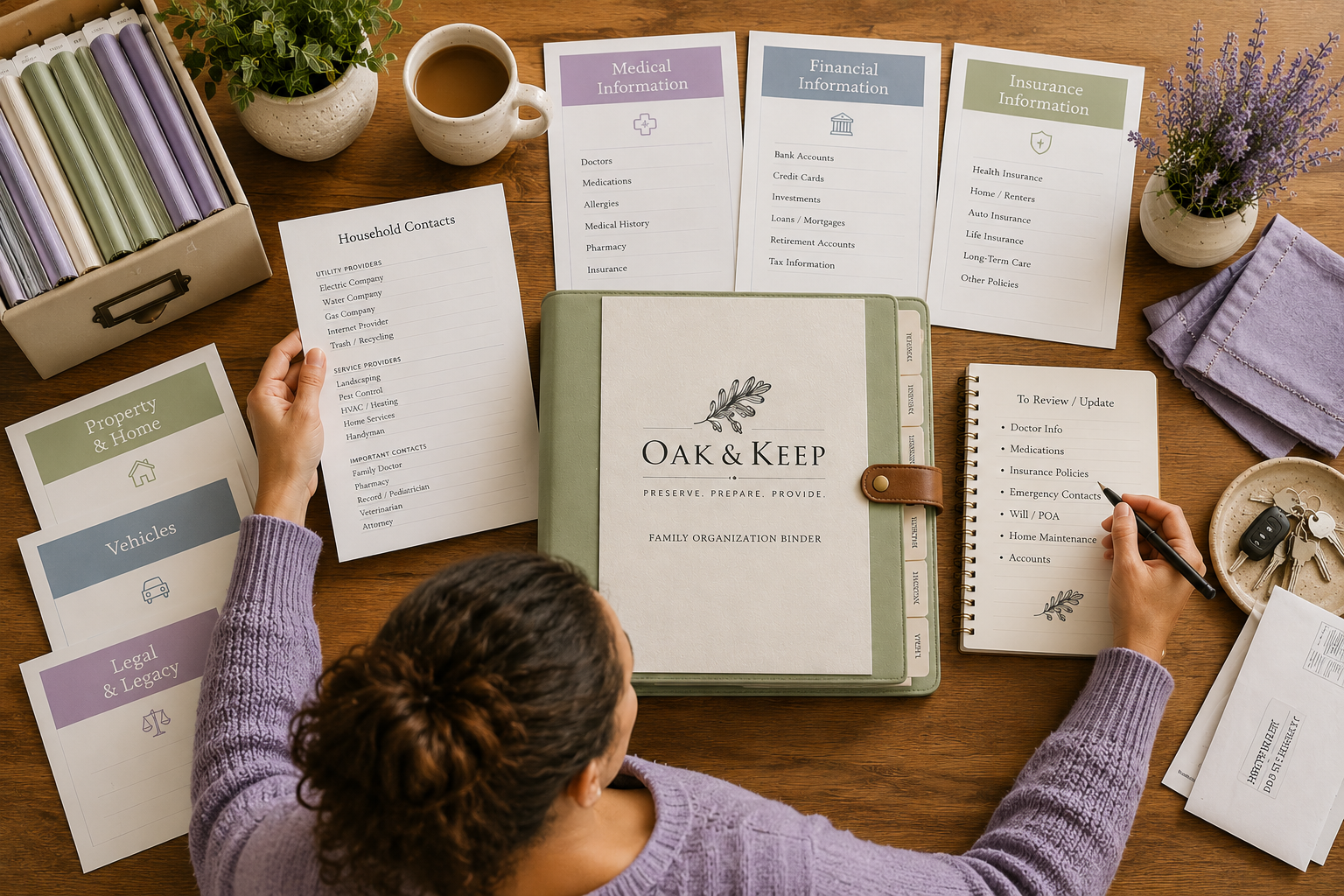
For some households, that may be a printed family records binder.
Others may use a combination of a physical organizer and securely stored digital information.
The exact system matters less than consistency.
Instead of important family information being scattered across drawers, folders, devices, and memory, there should be one place that serves as the starting point.
Organize Records by Category
A simple category system makes family records much easier to maintain.
Rather than creating a separate folder for every document, group related information together.
For example:
- Household information
- Personal records
- Medical information
- Insurance
- Financial information
- Property and home
- Vehicles
- Children and school
- Legal and legacy information
Clear categories also make it easier to notice when something important is missing.
Make Sure Someone Else Knows
A beautifully organized family records system isn’t very useful if you’re the only person who knows it exists.
At least one trusted person should know where your important information is kept and how to access the appropriate information if necessary.
That doesn’t mean everyone needs access to everything.
Sensitive financial, legal, and personal information should still be protected appropriately.
The goal is simply to prevent one person from becoming the only source of information the household may someday need.
Keep Your Family Records Current
Creating the system is only the beginning.
Family information changes.
You change doctors. Insurance policies renew. Children change schools. Vehicles are bought and sold. Emergency contacts move. Financial accounts change.
Choose a simple schedule for reviewing your family records once or twice a year and whenever a major life change happens.
A few minutes of maintenance can keep an organized system from slowly becoming outdated.
One Mistake Families Often Make
It’s easy to think organizing family records means creating the perfect filing system.
It doesn’t.
A complicated system that nobody maintains isn’t particularly helpful.
Start with the information that matters most. Put it somewhere logical. Make sure the right people know where it is.
You can always improve the system over time.
Final Thoughts
Organizing family records isn’t really about creating perfect files.
It’s about making important information easier to find.
When your household’s essential records and details have one trusted place, you don’t have to rely on one person’s memory or search through multiple locations every time something is needed.
Start small.
Gather the information you already have, organize it into simple categories, and build from there.
Over time, you’ll create a family records system that is easier to maintain—and easier for the people you trust to navigate when they need it.
Looking for a Complete System?
If you’re looking for one place to organize important family records and household information, the Oak & Keep Family Organization Binder provides a practical framework for keeping essential details together, organized, and easy to update over time.