
How to Create an Emergency Information Binder for Your Family
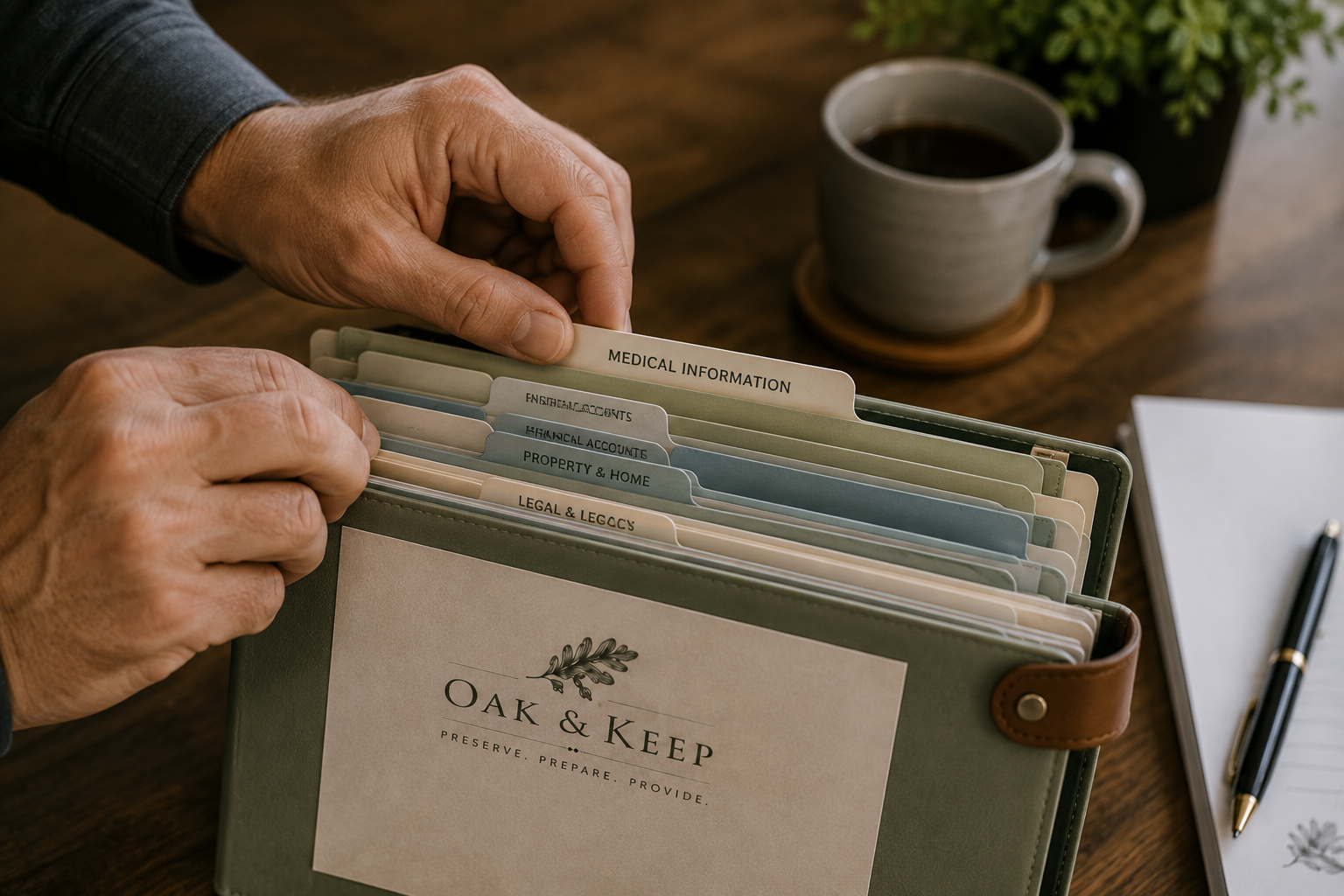
Most families don’t think much about where important information is kept until someone else needs to find it.
Maybe you’re away from home and a grandparent needs your child’s medical information.
A family member needs to handle an insurance claim.
Someone has to contact a doctor, find a policy number, or take care of the house unexpectedly.
Those situations don’t have to be major emergencies to reveal the same problem:
Important information is much easier to use when someone knows where to find it.
A family emergency information binder can create one trusted starting point.
Start With Emergency Contacts
Begin with the people someone may need to contact.
That might include:
- Immediate family members
- Nearby relatives or trusted friends
- Doctors and medical providers
- Children’s schools or childcare providers
- Veterinarian information
- Insurance contacts
- Important household service providers
- Attorney or financial professional when appropriate
Include names, phone numbers, and enough information for someone to understand why that person might need to be contacted.
Add Important Medical Information
Medical details can be difficult to remember accurately, especially when you’re helping someone else.
For each household member, consider organizing:
- Doctors and specialists
- Current medications
- Allergies
- Important medical conditions
- Pharmacy information
- Health insurance
- Emergency medical contacts
Keep this information current.
A short, accurate medical summary is more useful than pages of outdated information.
Organize Insurance Information
An unexpected event can involve several different types of insurance.
Make it easy to identify:
- Health insurance
- Homeowners or renters insurance
- Auto insurance
- Life insurance
- Other important policies
You don’t necessarily need every page of every policy inside the binder.
Record enough information to identify the coverage and know where the complete policy can be found.
Include Household Information
Sometimes the information someone needs is surprisingly ordinary.
Who is the electric provider?
Who services the heating and air system?
Where is the vehicle information?
Who takes care of the pets?
Consider including:
- Utility providers
- Home and property information
- Vehicle information
- Regular service providers
- Pet information
- Important household contacts
- Other responsibilities someone may need to handle
These details can help another person keep everyday life moving if you’re temporarily unable to manage it yourself.
Think About Children and Dependents
If someone else may need to care for your children or another dependent, consider what they would need to know.
That could include:
- School or childcare information
- Emergency contacts
- Allergies and medical needs
- Doctors
- Activities and schedules
- Transportation information
- Important care instructions
- Authorized caregivers or pickup information when applicable
You don’t need to document every detail of daily life.
Focus on the information another trusted adult would genuinely need.
Record Where Important Documents Are Kept
Your emergency information binder doesn’t need to contain every original document your family owns.
In fact, many sensitive originals may belong somewhere more secure.
Instead, record where important items can be found, such as:
- Birth certificates and identification records
- Insurance policies
- Property documents
- Financial records
- Wills and other legal documents
- Digital records
- Other securely stored information
Think of the binder as a roadmap.
It should help the appropriate person know what exists and where to look next.
Protect Sensitive Information
Convenience shouldn’t come at the expense of privacy.
Consider carefully what information belongs directly in your binder and what should simply be referenced by location.
Passwords, complete financial account information, Social Security numbers, and sensitive original documents may require additional protection.
Your family system should make important information findable without making private information unnecessarily accessible.
Make Sure Someone Knows the Binder Exists
An emergency information binder can’t help anyone if nobody knows about it.
Tell at least one trusted person:
- That you’ve organized the information
- Where the binder is kept
- How they could access the appropriate information if needed
You don’t need to give everyone access.
You simply want to make sure the system doesn’t depend entirely on you being available to explain it.
Final Thoughts
Creating a family emergency information binder isn’t about expecting something bad to happen.
It’s about making important information easier to find when everyday life doesn’t go according to plan.
Start with emergency contacts, medical information, insurance, household details, and information for children or dependents.
Then record where other important documents can be found.
You don’t have to organize everything at once.
A simple, current system that your family knows about is a practical place to start.
Looking for a Complete System?
The Oak & Keep Family Organization Binder provides a structured place for organizing important household, personal, medical, insurance, financial, property, vehicle, family, and legal information.
Families with children can also add the Oak & Keep School & Activity Pack for more detailed school, activity, caregiver, emergency contact, and day-to-day information.
Additional Oak & Keep Add-On Packs can expand the system for needs such as aging parents and caregiving, home maintenance, digital information, and other areas of family life.