What Family Records Should You Keep? A Practical Checklist
Most families accumulate important records a little at a time.
A birth certificate goes into a file. Insurance paperwork arrives in the mail. Medical information lives online. Vehicle documents end up in a drawer. School information gets saved somewhere else.
Before long, a household can have years of important information spread across dozens of places.
So what family records should you actually keep organized?
You don’t need to save every piece of paper that enters your home. A more practical approach is to focus on the records and information your household may need to reference again.
Here’s a good place to start.
Personal and Identification Records
Begin with the basic records that identify the people in your household.
Depending on your family, that may include:
- Birth certificates
- Social Security information
- Marriage records
- Divorce or custody documents
- Passport information
- Driver’s license information
- Adoption records
- Other important identification documents
Original documents should always be stored securely.
Your family organization system can help you keep track of what exists and where those originals are located.
Medical Information
Medical information can become especially important when someone else needs to help coordinate care.
Consider organizing:
- Doctors and specialists
- Current medications
- Allergies
- Medical conditions
- Pharmacy information
- Health insurance details
- Immunization records
- Important medical history
- Emergency contacts
Keeping these details current can make routine appointments easier and provide helpful information when circumstances change.
Insurance Records
Most households have several different types of insurance.
That might include:
- Health insurance
- Homeowners or renters insurance
- Auto insurance
- Life insurance
- Supplemental insurance
- Other specialized policies
You don’t necessarily need every page of every policy in your family records organizer.
Instead, make sure you can identify the policy, insurance company, policy number, and where the complete documents can be found.
Financial Information
Financial records require extra care because of the sensitive information they contain.
Your organized family information might include a record of:
- Banks and financial institutions
- Investment or retirement accounts
- Loans
- Credit cards
- Regular household expenses
- Tax records
- Important financial contacts
The purpose isn’t to leave sensitive account information sitting somewhere unsecured.
It’s to make sure the appropriate person can identify important accounts and know where to find additional information if it’s ever needed.
Home and Property Records
Your home comes with its own collection of important records.
Consider keeping track of:
- Mortgage or lease information
- Property insurance
- Property tax records
- Home warranties
- Major repairs and improvements
- Utility information
- Service providers
- Important household contacts
These records can be useful during everyday homeownership as well as when selling, moving, filing an insurance claim, or managing a property for someone else.
Vehicle Records
For each vehicle your household owns, consider organizing:
- Title information
- Registration
- Insurance
- Loan information
- Maintenance records
- Warranty information
- Roadside assistance details
The same idea can apply to RVs, boats, trailers, or other significant equipment your family owns.
Children and School Information
Families with children often have another entire category of records to manage.
That may include:
- School information
- Emergency contacts
- Medical and allergy information
- Childcare information
- Activity schedules
- Important school documents
- Custody or authorization information when applicable
Keeping these details together can also make it easier for another trusted adult to step in when needed.
Legal and Legacy Records
Some documents aren’t needed very often, but they can become extremely important when circumstances change.
These may include:
- Wills
- Trust information
- Powers of attorney
- Advance directives
- Beneficiary information
- Guardianship documents
- Important attorney or professional contacts
Original legal documents should be stored appropriately and securely.
Your family records system can help trusted people know that those documents exist and where they can be found.
Digital Information
Some of your family’s most important information may not exist on paper at all.
Consider keeping an organized record of:
- Important online accounts
- Digital subscriptions
- Cloud storage
- Devices
- Important digital files
- Where passwords or access instructions are securely maintained
You don’t need to place every password directly into a general household binder.
The important thing is having a secure plan for how necessary digital information can be accessed by the appropriate person.
What Don’t You Need to Keep?
Organizing family records doesn’t mean keeping everything forever.
Old duplicates, outdated routine paperwork, expired information, and documents you can easily retrieve elsewhere may not need permanent space in your system.
When you’re unsure whether something should be kept, consider three questions:
Would I need this again?
Would it be difficult to replace?
Would someone else need to know this exists?
Those questions can help separate important family records from ordinary household clutter.
Final Thoughts
There isn’t one perfect family records checklist that applies to every household.
A young family with children will have different information to organize than someone caring for aging parents. A homeowner will have different records than a renter. A family with a small business, farm, second home, or special caregiving responsibilities may need additional categories.
The goal isn’t to collect every possible document.
It’s to identify the information that matters to your household and create one trusted place where it can be found.
Start with the essentials.
You can always add to your family records system as your life changes.
Looking for a Complete System?
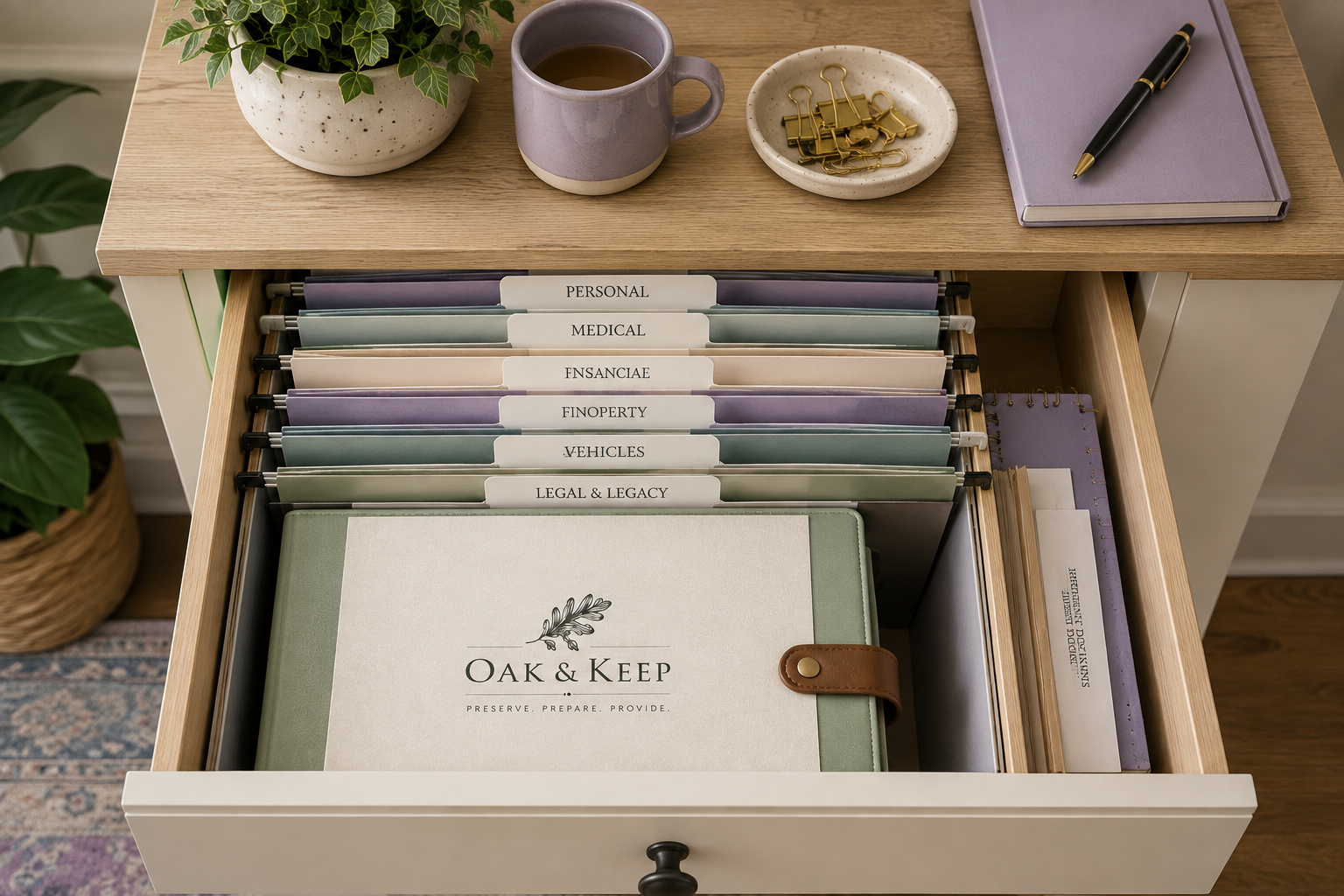
If you’re looking for a structured way to organize important family records and household information, the Oak & Keep Family Organization Binder provides a practical framework for bringing essential details together in one place and keeping them organized over time.