How to Organize Household Records and Important Paperwork
Paperwork has a way of spreading throughout a home.
Insurance documents land in one drawer. Vehicle records go somewhere else. Medical paperwork gets filed away. Home repair receipts pile up. Important information arrives by email and never becomes paper at all.
Eventually, you know the information exists.
You just aren’t quite sure where.
Organizing household records doesn’t require an elaborate filing system. The goal is simply to create a reliable way to know what you have and where to find it.
Start With the Records That Matter Most
Don’t begin by trying to organize every piece of paper in your house.
Start with the household records you’re most likely to need again.
That might include:
- Insurance information
- Medical records and provider information
- Financial and tax records
- Home and property documents
- Vehicle titles and registrations
- Warranties and major purchase information
- School or childcare information
- Important legal documents
- Emergency contacts
Once the important information has a home, you can decide what else is worth keeping.
Create Simple Categories
One of the easiest ways to organize important paperwork is to group similar information together.
Your categories might include:
- Household
- Personal
- Medical
- Insurance
- Financial
- Home and property
- Vehicles
- Children and school
- Legal and legacy
The categories don’t have to be perfect.
They simply need to make sense to the people who may eventually use the system.
Separate Information From Documents
Not every important household record needs to be stored in the same physical place.
Original legal documents may belong in secure storage. Financial records may be online. Medical information may live in a patient portal.
Your household organization system can still serve as the roadmap.
Record what exists, where it’s located, and any important contact information someone may need.
That way, one organized system can point you toward information stored in several different places.
Get Rid of What You Don’t Need
Organizing paperwork is easier when you’re not storing years of unnecessary documents.
As you sort, look for:
- Duplicates
- Outdated information
- Expired warranties
- Old routine statements
- Paperwork that can easily be accessed elsewhere
Some records need to be retained for financial, tax, legal, or other reasons, so check the appropriate requirements before discarding anything you’re unsure about.
The goal isn’t to keep less just for the sake of having less.
It’s to make the important information easier to recognize and find.
Make the System Easy to Update
A household records system should work with everyday life.
If updating it takes too much effort, it probably won’t stay current.
When a new insurance policy arrives, a vehicle changes, your child starts a new school, or you switch doctors, update the appropriate section.
It’s also helpful to review your records once or twice a year and remove information that’s no longer relevant.
Small updates are much easier than starting over every few years.
Make Sure Someone Else Knows Where to Look
One person often becomes the keeper of household information without realizing it.
They know where the paperwork is, which accounts exist, who to call, and how everything works.
That’s convenient until someone else needs an answer.
At least one trusted person should know where your household records are organized and where to begin if they ever need to help.
They don’t need access to everything.
They just shouldn’t have to start from scratch.
Final Thoughts
Organizing household records isn’t about creating a perfect filing cabinet.
It’s about making important information easier to find.
Start with the records that matter most. Create a few clear categories. Keep sensitive originals where they belong, and use your organization system to keep track of where everything can be found.
Over time, you’ll have a household records system that’s easier to maintain and easier for someone else to understand when needed.
Looking for a Complete System?
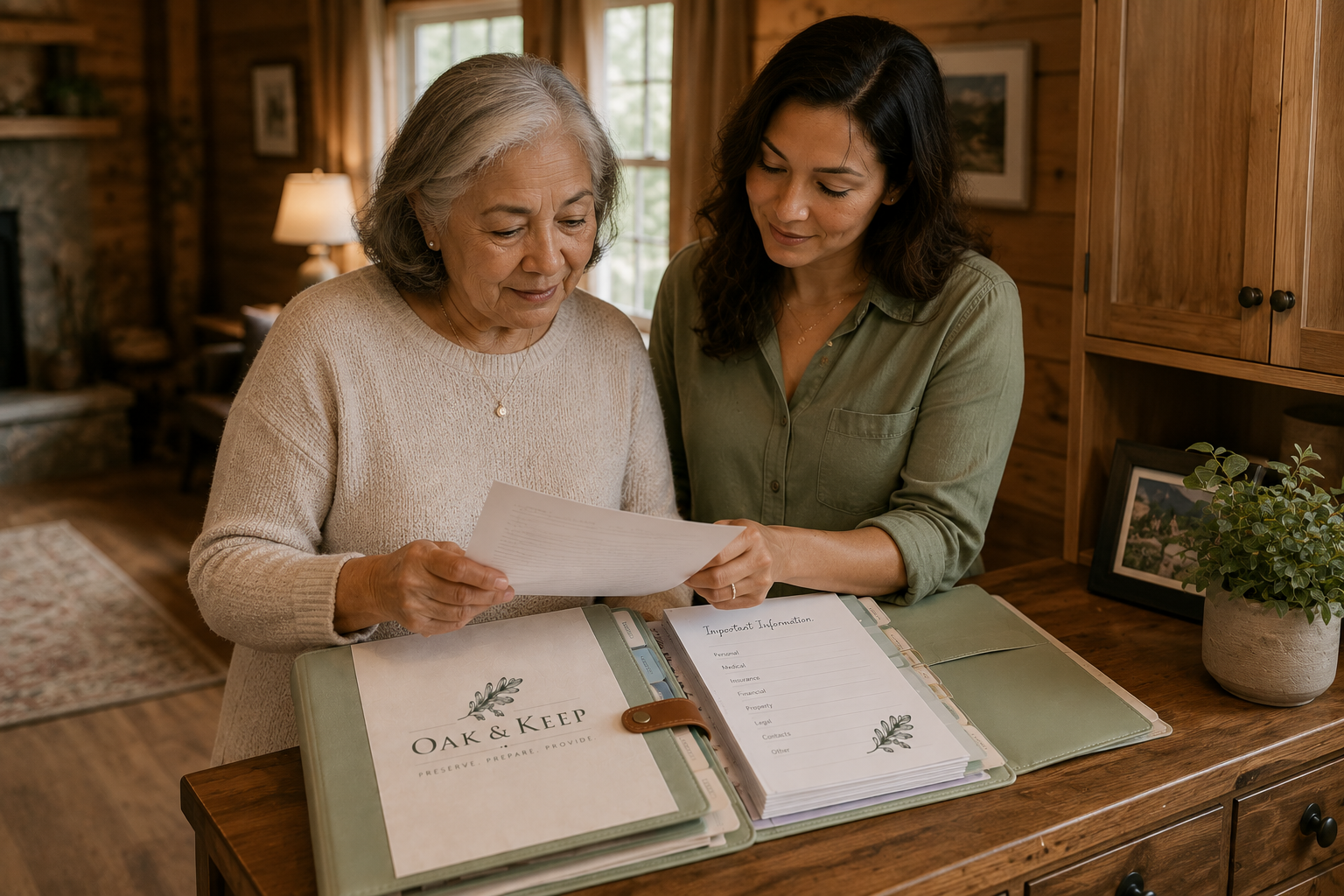
If you’re looking for one place to organize important household records and family information, the Oak & Keep Family Organization Binder provides a practical framework for keeping essential details organized and easy to update over time.
Families who need additional space for specific areas of life can also expand the system with Oak & Keep Add-On Packs designed for needs such as caregiving, home maintenance, school and activities, and more.