What Important Documents Should Every Family Keep?
Every household has documents that would be difficult—or sometimes impossible—to replace quickly.
The challenge is knowing which ones actually matter.
Between statements, policies, receipts, school paperwork, medical records, and documents accumulated over the years, it’s easy to either keep everything or lose track of something important.
A better approach is to identify the records your family is most likely to need and make sure they’re stored safely and easy to locate.
Personal and Identification Documents
Start with documents that establish identity and important life events.
Depending on your household, these may include:
- Birth certificates
- Social Security information
- Passports
- Marriage certificates
- Divorce or custody documents
- Adoption records
- Military records
- Other important identification documents
Original documents should be kept somewhere secure and protected from loss or damage.
Your family organization system can record what exists and where those originals are stored.
Medical and Insurance Information
Some medical information changes frequently, while other records may need to be kept much longer.
Important information may include:
- Health insurance information
- Current medications and allergies
- Doctors and specialists
- Immunization records
- Significant medical history
- Homeowners or renters insurance
- Auto insurance
- Life insurance
- Other important insurance policies
For frequently changing information, keeping an up-to-date summary may be more useful than saving every piece of paperwork.
Financial and Tax Records
Financial documents often require different retention periods, so it’s important to follow current tax, legal, or financial guidance when deciding what can eventually be discarded.
Records worth organizing may include:
- Recent tax documents
- Bank and investment information
- Retirement account information
- Loan documents
- Mortgage information
- Major financial agreements
- Important financial contacts
Sensitive financial information should always be stored securely.
The goal is not to make private information broadly accessible. It’s to make sure important accounts and documents can be identified by the appropriate person if necessary.
Home and Property Documents
Homeowners may accumulate years of paperwork related to their property.
Consider organizing:
- Deeds or closing documents
- Mortgage information
- Property tax records
- Homeowners insurance
- Major renovation records
- Warranties
- Receipts for significant purchases or improvements
- Important contractor or service information
Some of these records can also be useful when making an insurance claim or eventually selling the property.
Vehicle Documents
Each vehicle has its own set of records.
That may include:
- Title
- Registration
- Insurance
- Loan information
- Warranty
- Significant maintenance records
Families with RVs, boats, trailers, or other major equipment may want to organize those records in a similar way.
Legal and Legacy Documents
Legal documents may not be referenced often, but knowing where they are can become extremely important.
These might include:
- Wills
- Trust documents
- Powers of attorney
- Advance directives
- Guardianship documents
- Beneficiary information
- Other important legal agreements
Some originals may need to be stored separately or with the appropriate professional.
Make sure a trusted person knows what documents exist and where they can be found.
What About Children’s Documents?
Families with children may also need to keep:
- Birth and identification records
- Medical and immunization information
- School records
- Custody or guardianship documents when applicable
- Important childcare information
- Emergency and authorized pickup information
Some of this information changes regularly, so it helps to have a system that can be updated as children grow.
You Don’t Have to Keep Everything Together
One common misconception is that organizing important family documents means putting every original document into one binder or box.
It doesn’t.
Some originals belong in secure storage. Other records may be stored digitally. Certain information may remain with an attorney, financial institution, medical provider, or another trusted source.
Your family organization system can act as the guide that tells you what exists and where to find it.
That’s often more useful than trying to physically store everything together.
Final Thoughts
The important documents every family should keep will vary from household to household.
Start with identification, medical and insurance information, financial records, property and vehicle documents, and important legal records.
Then consider what is unique to your family.
You don’t need to save every piece of paperwork.
You simply need a reliable way to identify the information that matters, protect it appropriately, and make sure it can be found when it’s needed.
Looking for a Complete System?
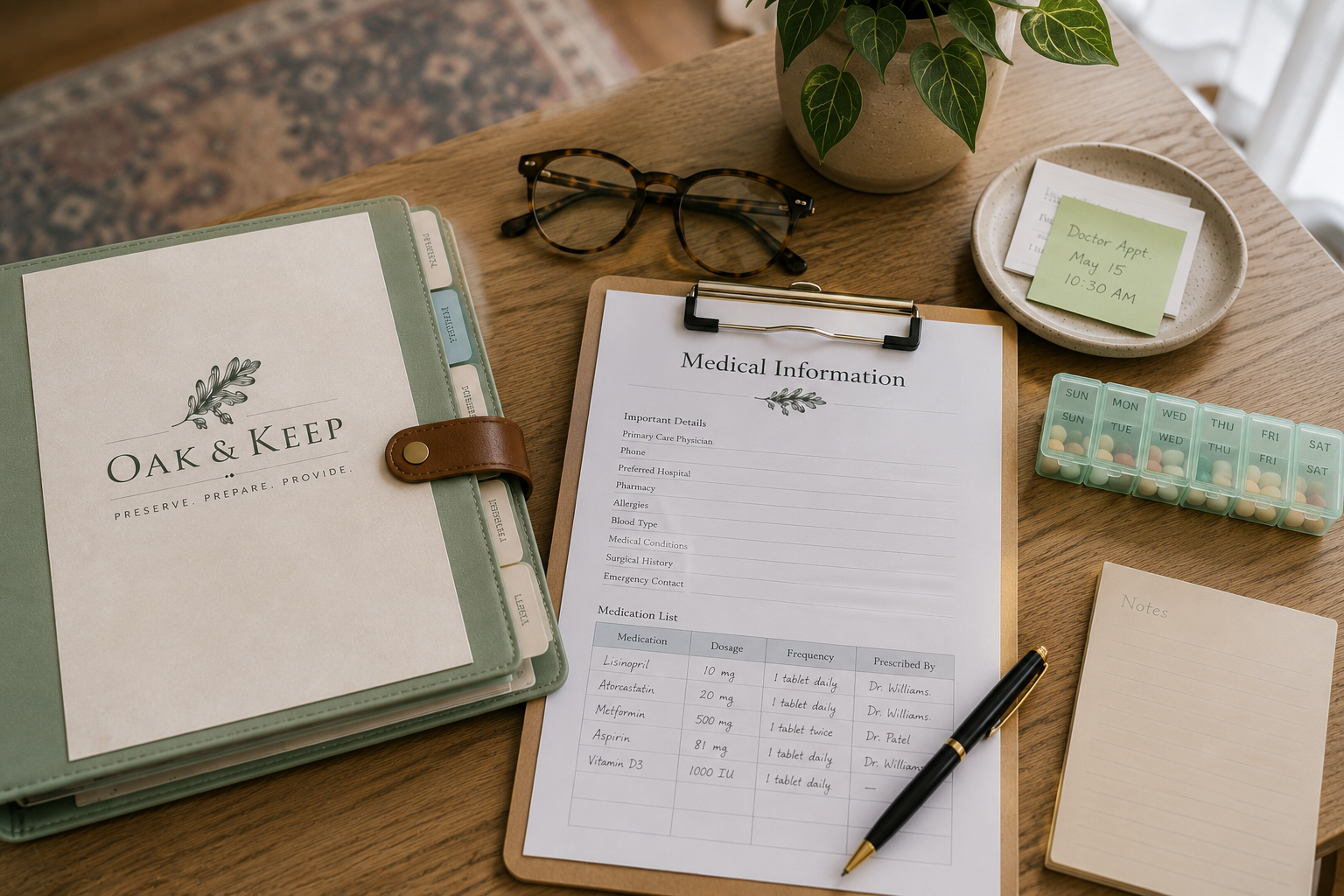
If you’re looking for a structured way to organize important family documents and the information connected to them, the Oak & Keep Family Organization Binder provides dedicated sections for household, personal, medical, insurance, financial, property, vehicle, children, and legal information.
Families who want more room for children’s changing school, activity, caregiver, and emergency information can also add the Oak & Keep School & Activity Pack.