Where Should You Keep Important Family Information?
Most families don’t have just one type of important information.
There are documents you use regularly. Records you may need only once every few years. Sensitive information that requires extra protection. And everyday household details that someone else may need to find quickly.
So where should you keep it all?
The answer isn’t necessarily one physical location.
A good family organization system gives important information one trusted starting point, while allowing sensitive or original documents to stay wherever they belong.
Create One Place to Start
Think about the person in your household who usually knows where everything is.
They know where the insurance information is kept.
They know which doctor everyone sees.
They know where the vehicle title is stored and which company services the air conditioner.
A family information system can become the place that captures that knowledge.
It doesn’t need to contain every original document. It should help answer two basic questions:
What important information do we have?
Where can it be found?
Keep Everyday Information Accessible
Some family information is useful often enough that it should be relatively easy for the appropriate people to access.
That might include:
- Emergency contacts
- Doctors and medical providers
- Current medications and allergies
- Insurance information
- School and childcare contacts
- Household service providers
- Vehicle information
- Important schedules or responsibilities
Where you keep these details depends on your household, but the system should be somewhere you’ll actually use and update it.
Protect Sensitive Information
Other information requires more care.
That might include:
- Social Security information
- Financial account details
- Passwords
- Original legal documents
- Property documents
- Birth certificates and passports
- Other sensitive personal records
These items may belong in secure physical or digital storage rather than an everyday family binder.
Your organization system can still record that the information exists and where the appropriate person can find it.
Don’t Forget Digital Records
More and more family information exists online.
Insurance policies may be accessed through an account. Medical records may live in a patient portal. Financial statements may be paperless. Important files may be stored in the cloud.
You don’t need to print everything simply to make it organized.
Instead, keep track of where important digital records are stored and make sure there is an appropriate plan for accessing them when needed.
Make Sure Someone Else Knows Where to Look
The best location for your family information is one that doesn’t depend entirely on one person.
At least one trusted person should know:
- That your organization system exists
- Where it’s kept
- Where particularly important original documents are stored
- How the appropriate information can be accessed if necessary
That doesn’t mean giving everyone access to everything.
It simply means someone else knows where to begin.
Choose a System You Can Maintain
There’s no perfect storage system for every family.
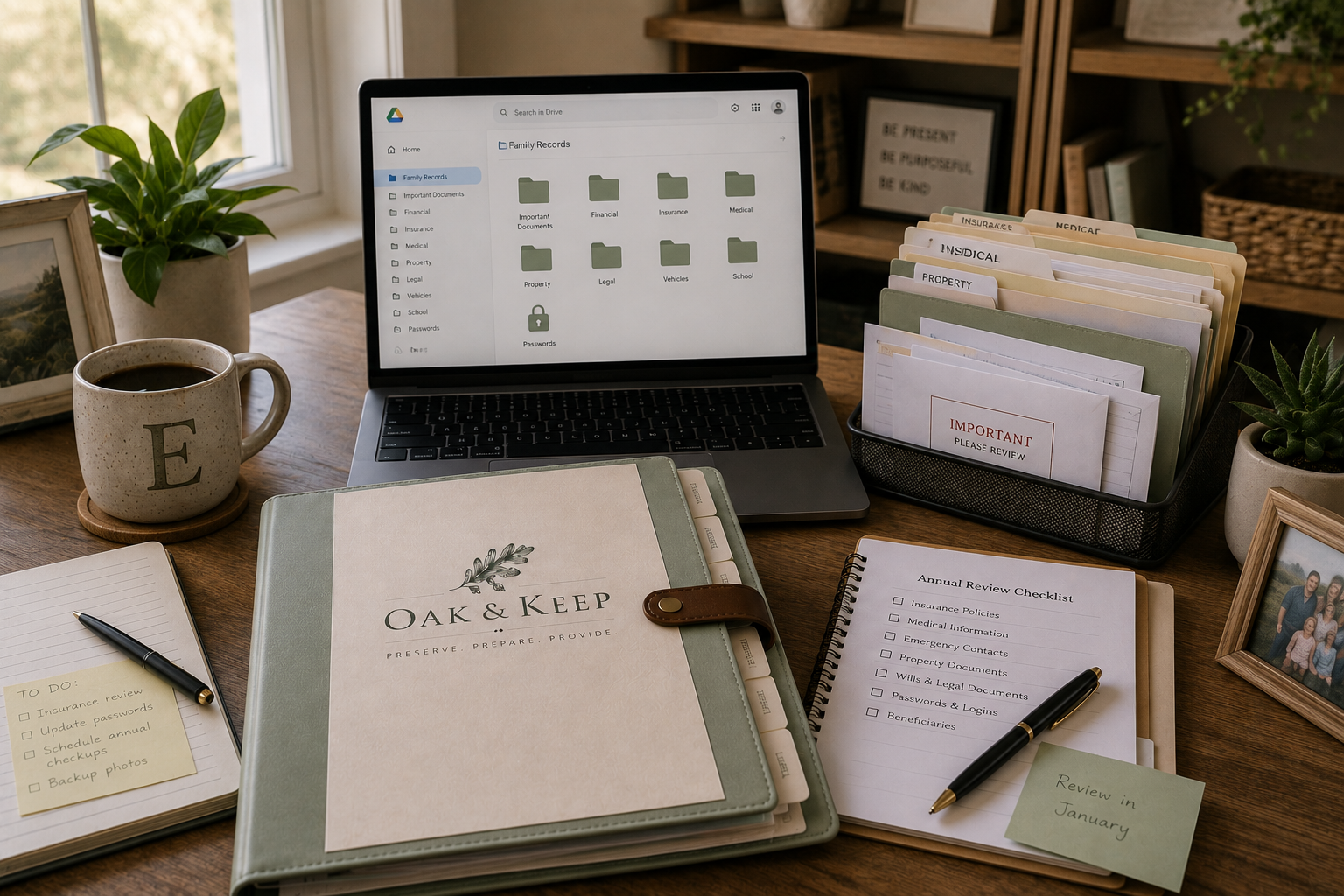
Some households prefer a printed binder. Others rely heavily on digital records. Many use a combination of both.
The best system is one that’s secure enough for the information it contains, simple enough to maintain, and clear enough that another trusted person could understand it.
Final Thoughts
Important family information doesn’t have to physically live in one place.
But there should be one trusted place to start.
Use your family organization system to keep frequently needed information together and to create a roadmap to sensitive documents, digital records, and originals stored elsewhere.
That way, the important knowledge that keeps your household running isn’t scattered entirely across drawers, devices, accounts, and memory.
Looking for a Complete System?
The Oak & Keep Family Organization Binder provides one structured starting point for organizing important household, personal, medical, insurance, financial, property, vehicle, family, and legal information.
Rather than requiring every original document to live in one place, the system can help your family keep track of what information exists and where important records can be found.
Oak & Keep Add-On Packs can also expand the system for specific needs such as school and activities, caregiving, home maintenance, digital information, and more.