How to Organize Important Papers Without Keeping Everything
One of the hardest parts of organizing paperwork isn’t deciding where to put it.
It’s deciding what deserves to stay.
Mail arrives. Statements accumulate. Insurance companies send updates. Schools send paperwork home. Receipts collect in drawers. Medical offices provide visit summaries.
When you’re not sure what you might need later, keeping everything can feel like the safest option.
Eventually, though, the important papers become harder to find because they’re surrounded by everything else.
A useful family records system isn’t about keeping more.
It’s about making the information that matters easier to identify and find.
Start With the Important Records
Before sorting through every piece of paper in your home, identify the categories that matter most.
That might include:
- Personal and identification records
- Medical information
- Insurance policies
- Financial and tax records
- Home and property documents
- Vehicle records
- School or childcare information
- Important legal documents
- Warranties or records for major purchases
Starting with clear categories gives you somewhere to place the documents you know are important.
Ask Whether You’ll Need It Again
When you’re unsure whether to keep something, ask a few simple questions.
Will I reasonably need this again?
Would it be difficult to replace?
Is there a legal, financial, tax, insurance, or other reason I need to retain it?
Does someone else need to know this information exists?
If you’re unsure about a document’s required retention period, check with the appropriate tax, legal, financial, insurance, or other professional before discarding it.
Not every piece of paper needs permanent storage.
Remove Duplicates and Outdated Information
Paperwork becomes overwhelming partly because old information stays mixed with current information.
As you organize, look for things such as:
- Duplicate copies
- Expired policies
- Outdated contact information
- Old routine statements you no longer need
- Expired warranties
- Instructions for items you no longer own
- Information that has been replaced by a current version
Removing outdated material makes the records you actually need much easier to see.
Don’t Print Everything That’s Digital
Many household records are now available online.
Bank statements, insurance policies, medical records, utility bills, and other information may already be securely available through an account or portal.
You don’t necessarily need a paper copy of every digital record.
Instead, your family organization system can identify what information exists and where it can be accessed.
That keeps your system useful without turning it into an archive.
Separate Permanent Records From Everyday Information
Not all important information needs to be stored the same way.
Original birth certificates, passports, property documents, and certain legal records may need secure storage.
Frequently changing information—such as medications, doctors, emergency contacts, or school details—needs to be easier to update.
Think of your system in two parts:
Information you need to reference and maintain.
Documents you need to preserve securely.
Keeping those purposes separate can make family organization much simpler.
Give New Paperwork a Routine
Once you’ve cleared the backlog, create a simple habit for new paperwork.
When something comes into the house, decide whether it should be:
- Acted on
- Added to your organized records
- Stored securely
- Digitized when appropriate
- Discarded or shredded when appropriate
The faster you make that decision, the less likely paperwork is to start accumulating again.
Final Thoughts
Organizing important papers doesn’t mean finding a better place to store everything you’ve ever received.
It means deciding what matters.
Keep records that are important, difficult to replace, required for an appropriate period, or genuinely useful to your household.
Remove duplicates and outdated information. Let digital records stay digital when that makes sense. Protect sensitive originals appropriately.
Then create one trusted system that helps you know what you have and where to find it.
A smaller, well-organized collection of important family records is far more useful than boxes of paperwork nobody wants to sort through.
Looking for a Complete System?
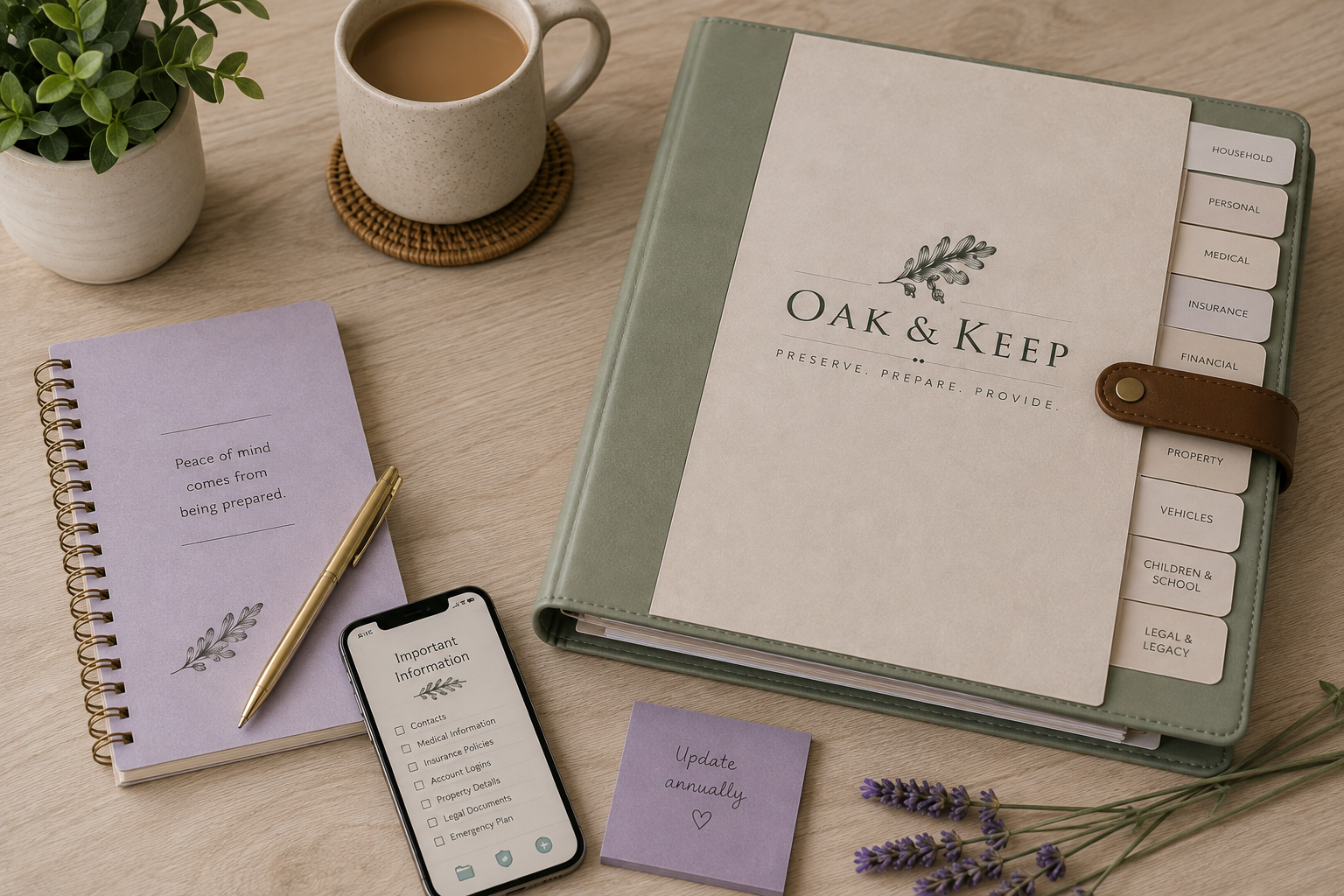
The Oak & Keep Family Organization Binder provides a structured framework for organizing the household information and important family records you want to keep track of without requiring every piece of paperwork to live in one place.
Oak & Keep Add-On Packs can expand the system for areas that need additional detail, including caregiving, school and activities, home maintenance, digital information, and other family needs.